ABOUT

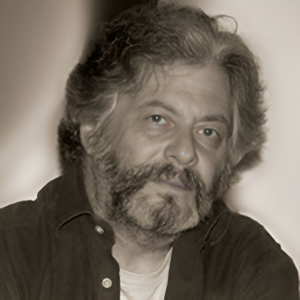
John Clive

John Clive has been using computers to make images since the introduction of the original Quantel Paintbox – the precursor of Adobe Photoshop. He embraces the technology, not as a tool, but as a medium in its own right with its own aesthetic.

Before concentrating on fine art in the mid-90’s he received a number of national and international awards for his work as a television commercials director including D&AD, British Television Awards, the One Show, Cannes Lions and others. 

awards

He is regarded as a leading innovator in the digital applied arts. In the 1980s and 1990s he played a pioneering role in imaging techniques, including morphing & photo realistic computer animation.

He has lectured, broadcast and written articles on these subjects for the London Institute of Contemporary Arts (ICA), The British Academy of Film & Television Arts (BAFTA), The National Film Theatre (NFT), BBC TV & Radio and the American Cinematographer Magazine.

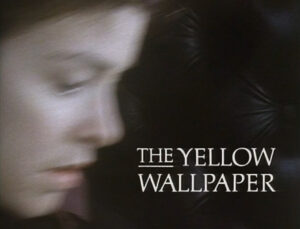
John has also written and directed for the stage and television, including his play, “The Healer” starring Phil Davis, at the Old Red Lion, London; Fassbinder’s “The Bitter Tears of Petra von Kant” at the Latchmere, London; the BBC/Masterpiece Theater film “The Yellow Wallpaper”, You can watch the film here:
yellowwallpaper

He directed the Tim Firth scripted TV comedy “Once Upon A Time in the North” for the BBC, starring Bernard Hill.

He has worked as a consultant and visual effects designer for other filmmakers, including Franco Zeffirelli, Mel Gibson and David Putnam.

An architectural concept was chosen by Cecil Balmond chosen by Cecil Balmond, European Chairman of the Arup Group Ltd., European Chairman of the Arup Group Ltd as a submission to the World Trade Center redevelopment project.

wtc proposal

CV


Trained at Ealing College of Art, London.


Fine Art Awards:

Winner:

Phoenix Arts Centre Brighton Blowup

Canon Award Canon Digital Creators Competition


Finalist:

Digital Graffiti Art Festival, Florida

Irvine Regeneration Project

Transmediale 03, Berlin

Digitalism, USA

International Open Image

Epson Digital Art2001

Pixxelpoint


Solo Exhibitons:

The Prudential Building, London

The Charlotte Street Gallery, PHFA, London

Parallax Gallery, Camden, London

Sacred Site and Sound, Tintern Abbey, Monmouthshire


Selected Group Exhibitons:

ING The Discerning Eye – the Mall Galleries

The Billboard Art Project – Quincy at in Quincy, IL

The International Streaming Festival, The Hague

Candid Arts. Islington, London

Obsidian Gallery, Buckinghamshire

Square Art, Soho, London

Barclays Capital, Canary Wharf London

Ventura P&O

On the Wall, London

Gallery 102, Shoreditch, London

Peter Harpley Fine Arts, London

New York Affordable Art Fair

fresh art, London

The Fulton Street Gallery, Troy, New York

Peter Harpley Fine Arts, London

Haus der Kulturen der Welt, Berlin

Aoyama Spiral, Tokyo

Museo Nacional de Bellas Artes, Buenos Aires, International Art Bienniale  (permanent collection)

nobleART, Cambridge, UK

Digitalism Tour – 32 cities North America

including:

Los Angeles Museum of Contemporary Art

San Francisco Museum of Modern Art.

The Colville Gallery

Peter Harpley Fine Arts, London

Antelope Valley Gallery, Lancaster, California

Spectrum 2002, Commonwealth Institute, London

RKB Gallery, London

Artworks are in private, public & corporate collections in the U.S., the U.K., France, Germany, Spain, Italy, Japan and Argentina.

“The work of John Clive is very much about the surfaces he creates… these are masterful demonstrations of how the cold calculating computer can simulate the supposedly wild abandon and mystery of that mode [abstract expressionism] of art making… he maps his expressive colors and textures to three dimensional surfaces and achieves the sort of “synthesis” that I hold to be the true power of digital tools to create significant and unique art. …this work takes flight and demonstrates just where we are heading with digital art.”

J.D. Jarvis, Museum of Computer Art

STATEMENT

Waveforms are fundamental at every level of existence, from the quantum to the galactic. There are now coherent scientific theories that question the wave-particle duality, proposing that waves alone form the basis of existence.

There is only one place in the universe where these forms are largely absent. It’s where most of us live – the urban environment. Our species are organisms whose body, brain and senses have evolved over many millions of years – as organisms, we are aliens in a world of straight lines.

Most city dwellers choose to travel great distances to the seaside or natural landscapes where waveforms are prevalent. They do this to restore themselves physically, mentally and spiritually. It is thought of as an ‘escape’.

My work is a practical attempt to bring these forms back into our field of view. Bringing images of nature into the town is a conventional role for art. But in our current context, mimesis is more likely to produce nostalgia – to evoke a sense of absence. My aim is to return waveforms to our everyday reality as a restorative presence in the here and now.

If the work succeeds, it will provide a little refuge from our synthetic environment. 

John Clive


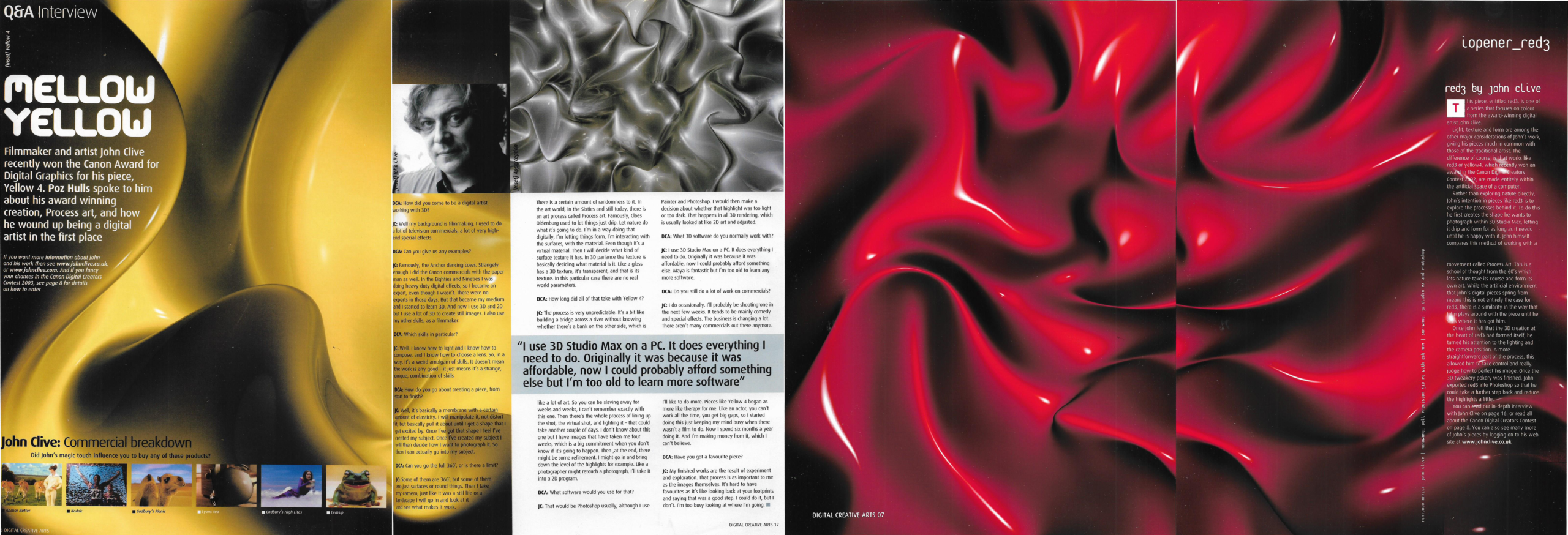
Interview with Poz Hulls, Digital Creative Arts Magazine